
The first time sous vide scallops hit my table, it was one of those Tuesdays where everything ran late, homework piled up, and the dishwasher still hummed in the background. Sous vide scallops sounded like a project, but I had a bag of sea scallops, a circulator, and zero energy left for juggling pans or guessing at the perfect sear. I seasoned the scallops with salt, pepper, and a pat of butter, sealed the bag, and slipped it into the warm water while I did the nightly backpack shuffle and tried to clear the counters.
That quiet, steady heat handled the cooking, which felt just as comforting and low-stress as knowing I can always throw together a pot of my Creamy Vegetable Soup when the day runs off the rails. When the timer beeped, I pulled the sous vide scallops from the bag, patted them bone-dry, and dropped them into a screaming hot skillet; in under a minute per side they turned deep golden and smelled like something from a fancy spot downtown. I served them over buttered noodles with a squeeze of lemon and peas from the freezer, the same way I lean on cozy bowls like my Creamy Lasagna Soup when I want dinner to feel a little special without adding extra work.
From that night on, sous vide scallops became my favorite “fake fancy” move, right next to big, satisfying pots like my Creamy Cowboy Soup and Sausage Potato Soup that also fit into real-life weeknights.
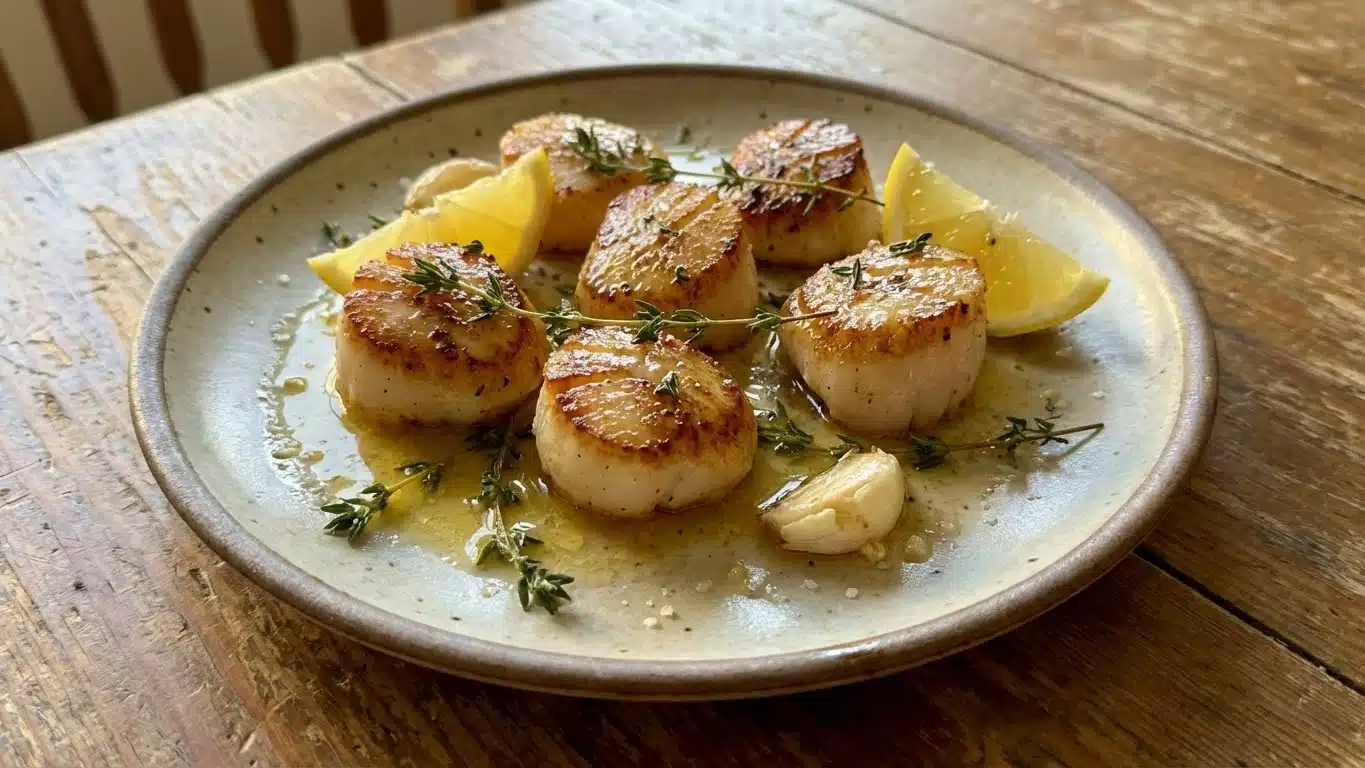
Sous Vide Scallops
Ingredients
Equipment
Method
- Preheat your sous vide water bath to 122°F for tender scallops (or up to 130°F for a firmer bite).
- Season scallops with salt and pepper. Place in a single layer in a vacuum-seal or zipper bag with butter or oil. Seal the bag.
- Place the bag in the sous vide bath. Cook for 30 minutes if fresh, or 40–45 minutes if frozen.
- Remove the scallops from the bag and pat them very dry with paper towels. Optionally, chill them briefly in an ice bath to firm them up.
- Heat a skillet (cast-iron or stainless steel) over high heat. Add a small amount of oil and sear scallops for 30–60 seconds per side until golden brown.
- Optional: Add a pat of butter, smashed garlic, or squeeze of lemon to the skillet and spoon over scallops to finish.
- Serve immediately over your choice of noodles, rice, mashed potatoes, or salad. Garnish with herbs or lemon wedges.
Nutrition
Notes
Tried this recipe?
Let us know how it was!Table of Contents
Why sous vide scallops fit real life
Sous vide scallops time and temperature basics
Sous vide scallops shine for home cooks because the water bath stays at one steady temperature, so you skip the tightrope walk between just-right and rubbery. Most trusted guides suggest cooking sea scallops around 122°F to 123°F for roughly 30 minutes, which gives them a silky, tender center that still slices neatly with a fork. Some people like a bit more bite and nudge the bath up toward 130°F, but staying near 122°F usually keeps that luxe, restaurant-style feel that makes sous vide scallops such a treat.
Fresh sous vide scallops usually need about 30 minutes in the bath, while frozen scallops tend to do best with 40 to 45 minutes so they thaw and warm through completely before they ever touch the pan.
You want them in a single layer in the bag with a little butter or neutral oil plus simple seasoning, just like you spread ingredients out in one cozy pot of my Creamy Bacon Potato Soup so every spoonful tastes rich and even.
From bag to pan: how to nail the crust
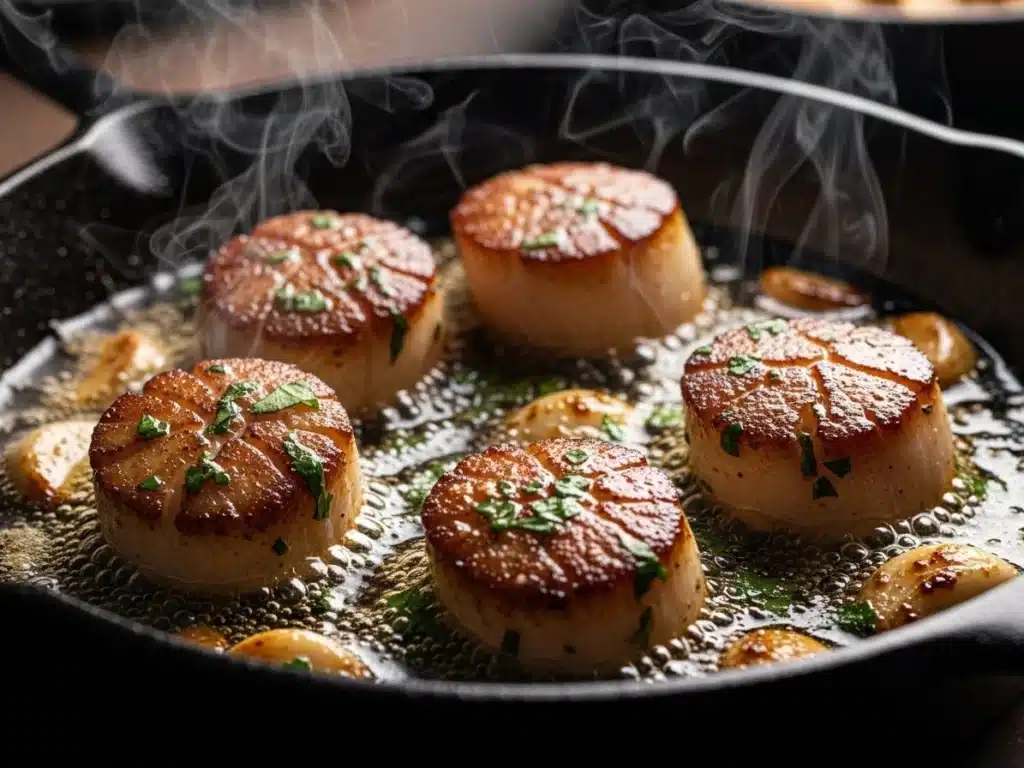
The real magic moment with sous vide scallops happens when you move from that gentle bath to a blazing hot skillet. As soon as the timer stops, you pull the bag from the water, lift out the scallops, and blot them very dry on all sides, because any surface moisture stands between you and that deep golden crust. Some cooks like to chill the scallops briefly in an ice bath, which pauses the internal cooking and firms them up slightly so they stay perfectly tender while the outside browns fast.
Then you heat a cast-iron or stainless steel pan until it’s very hot, add a thin slick of oil, and lay the scallops down with a bit of space between each one; let them sear for 30 to 60 seconds per side until the surface turns a rich caramel color.
Because sous vide scallops already sit at the exact doneness you want, you only focus on color and flavor in the pan instead of worrying about the middle, which feels as relaxed as reheating a cozy pot of my Cauliflower Soup and finishing it with toppings at the last minute. In the final moments, you can toss in a knob of butter, a smashed garlic clove, or a quick squeeze of lemon, then spoon that hot, fragrant butter over your sous vide scallops the same way you finish hearty bowls like my Outback Potato Soup with cheese and bacon right before bringing them to the table.
Flavor ideas and easy sides for sous vide scallops
Bright sauces for sous vide scallops
Sous vide scallops love simple, bold flavors, so you don’t need much more than butter, citrus, and garlic to make them shine. Many cooks finish seared scallops in a quick lemon butter or garlic butter sauce: melt butter in the hot pan, add minced garlic until fragrant, then stir in lemon juice and a pinch of salt before spooning it over the cooked scallops. If your crew likes a tiny bit of heat, a sprinkle of Cajun seasoning or red pepper flakes in that same butter gives the scallops a cozy, spicy kick without hiding their natural sweetness.
For something a little different, a brown butter drizzle with capers and parsley tastes rich and nutty and still comes together in just a few minutes while the noodles or rice finish on the stove.
Simple sides that match your pace
Because sous vide scallops cook mostly hands-off, they pair beautifully with sides that also come together quickly. Pasta or rice makes a natural base, and you can toss hot noodles with olive oil, garlic, and a squeeze of lemon while the scallops sear, then slide them right on top. If you like “one big bowl” meals, think about serving sous vide scallops over creamy mashed potatoes or a quick risotto-style rice, which feels just as comforting as a ladle of your Creamy Vegetable Soup on a cold night. Light veggies round out the plate fast: steamed asparagus, a simple green salad, or even peas stirred into buttery noodles keep things fresh without adding much work.
On nights when you want pure comfort, you can also build your plate around a cozy side soup like your Creamy Bacon Potato Soup and treat the scallops as the special protein on the table.
Quick reference: basic sous vide scallops settings
Serving tips
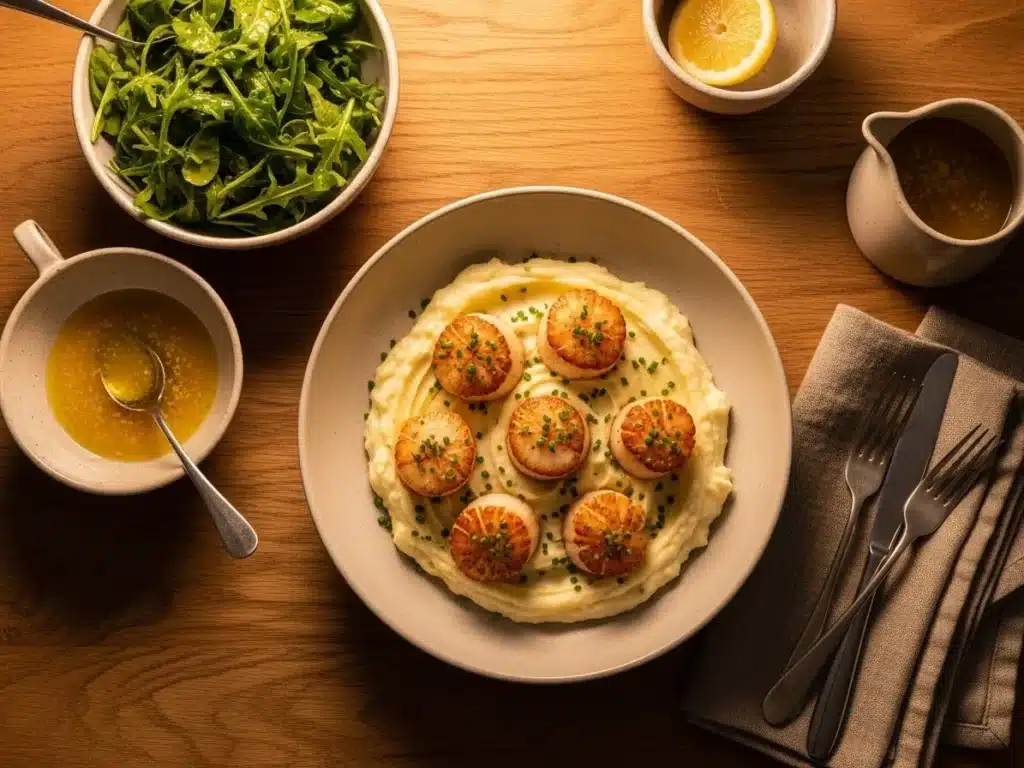
Sous vide scallops work beautifully in simple bowls and salads when you want something lighter. You can set them on a bed of arugula with cherry tomatoes, cucumber, and a lemony vinaigrette, or spoon them over creamy polenta with a little grated Parmesan. For a “special but easy” spread, pair a platter of sous vide scallops with small bowls of sauces (garlic butter, lemon caper, or a mild Cajun cream) and let everyone mix and match, the way you lay out toppings next to a steaming pot of your Creamy Cowboy Soup on busy nights.
FAQs about sous vide scallops
How long do you sous vide scallops?
Most home cooks sous vide scallops for about 30 minutes when they’re fresh, which gives enough time for the centers to reach the target temperature without turning them mushy. If you start from frozen, plan on closer to 40–45 minutes so the scallops can fully thaw and warm through in the bag before they ever touch the pan. Just like your Creamy Lasagna Soup gets better when it simmers just long enough for the flavors to come together, sous vide scallops taste best when you give them that full window in the bath.
What temperature should I use for sous vide scallops?
A bath set around 122°F is a popular choice for sous vide scallops because it keeps the texture tender and almost buttery while still letting you finish them with a hot, fast sear. Some guides suggest going a bit higher, up to about 130°F, for a firmer bite, but many scallop-focused recipes land in the low 120s for that restaurant-style, silky feel. As with any lower-temperature seafood, handle and chill your scallops properly and serve them soon after cooking, the same way you treat dairy in cozy bowls like your Outback Potato Soup.
Can you sous vide frozen scallops?
Yes, you can sous vide scallops straight from frozen, which makes weeknight planning a lot easier. You keep the temperature the same, around 122°F, but extend the time to about 45 minutes so the scallops can thaw and then gently cook all the way through. This trick gives you the same freedom you enjoy with freezer-friendly soups like your Creamy Cowboy Soup, because you can grab what you have on hand and still get a special-feeling dinner on the table.
How do you store and reheat leftover sous vide scallops?
If you have leftover sous vide scallops, let them cool quickly, then store them in an airtight container in the fridge and eat them within a day for the best flavor and texture. To reheat, warm them very gently in a low pan with a bit of butter or sauce, or serve them cold over a salad instead of trying to sear them again, which can make them tough. Leftovers also taste great chopped and folded into a warm bowl of your Creamy Vegetable Soup for a quick seafood twist.